
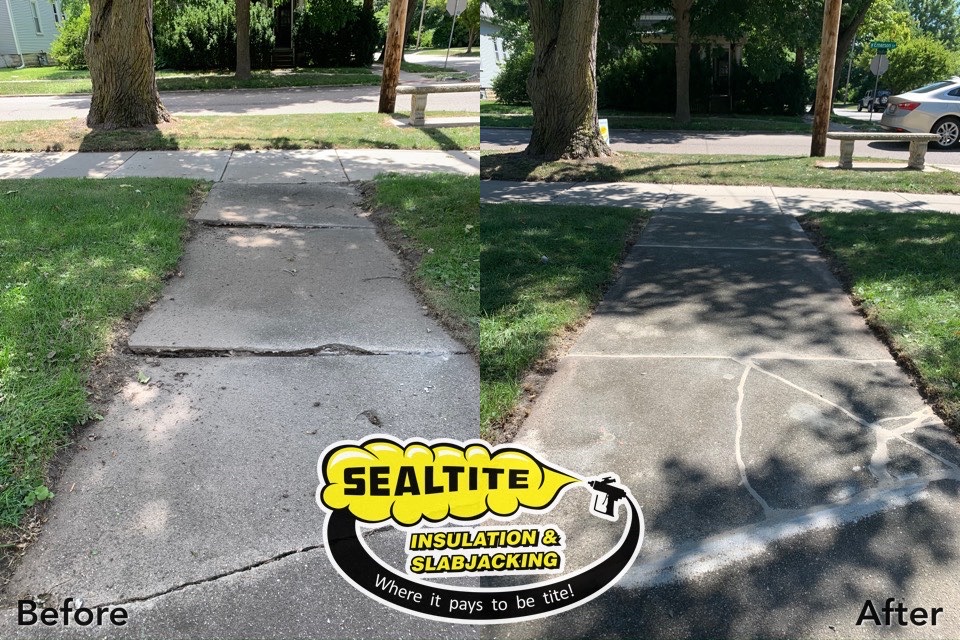
Cracks in your concrete might seem like a minor problems, but they often point to something more serious happening below the surface. Whether it’s your driveway, sidewalk, patio, or a commercial floor, repeated cracking is usually a sign of underlying movement that needs to be addressed sooner rather than later.
If you’re tired of seeing the same cracks come back, here’s what’s causing the problem—and how to fix it the right way.
What’s Behind Cracking Concrete?
Concrete is durable, but it isn’t designed to flex. As time goes on, a variety of factors can cause it to crack—especially in Central Illinois, where soil and weather conditions play a major role.
1. Shifting Soil
One of the biggest causes is soil movement beneath the slab. The clay-rich soil common in Illinois expands when it absorbs moisture and contracts when it dries out. This constant cycle creates stress under your concrete, eventually leading to cracks.
2. Seasonal Freeze-Thaw Cycles
Illinois winters can be tough on concrete. Water seeps into small openings, freezes, and expands—making existing cracks larger and creating new ones over time.
3. Drainage Problems
Too much water around your home or building can weaken the soil underneath your concrete. As the ground becomes unstable, the slab begins to settle unevenly and crack.
4. Poor Base Preparation
If the ground wasn’t properly prepared before the concrete was poured, it may not have the support it needs. This can lead to uneven settling and surface damage later on.
5. Heavy Use and Load Stress
Driveways and commercial floors sustain constant pressure. Over time, repeated weight from vehicles or equipment can result in cracking—especially if the base isn’t stable.
Why Repairs Don’t Always Last
Many people try to fix cracks with sealants or patching products, only to see the problem return.
That’s because the visible crack is just a symptom. The real issue lies beneath the surface. If the soil continues to shift or settle, the concrete will continue to crack—no matter how many times it’s patched.
The Right Way to Fix Cracked Concrete
To achieve results that hold up over time, you need to correct what’s happening below the slab—not just the surface.
Concrete Lifting (Slabjacking)
Slabjacking is a proven method for repairing cracked and uneven concrete without the need for full replacement.
The process involves:
- Drilling small, precise holes into the slab
- Injecting material beneath the concrete
- Lifting and leveling the surface
- Filling voids to create a stable base
By stabilizing the area underneath, slabjacking helps prevent future cracking and restores the integrity of your concrete.
Why Property Owners Choose Slabjacking
- Cost-effective compared to replacement
- Quick turnaround—often completed in a single day
- Minimal disruption to your property
- Long-term stability
- Improved safety and appearance
When It’s Time to Take Action
It’s best to treat concrete issues early before they worsen. Things to keep an eye on:
- Cracks that continue to spread
- Uneven or sunken areas
- Water collecting near slabs
- Raised edges creating trip hazards
- Gaps forming beneath the concrete
Work with a Local Expert You Can Trust
At Sealtite Insulation & Slabjacking, we help homeowners and businesses throughout Central Illinois identify the root cause of their concrete issues and fix them with long-lasting solutions.
We don’t just treat the surface—we focus on stabilizing what’s underneath so the problem doesn’t come back.
Don’t Let Cracks Get Worse
Ignoring cracked concrete can lead to more extensive damage and higher repair costs over time.
Schedule Your Free Estimate
If you’re noticing cracks or uneven concrete, now is the time to act. Contact Sealtite Insulation & Slabjacking today to schedule your free estimate and get a clear plan to restore your concrete the right way.