
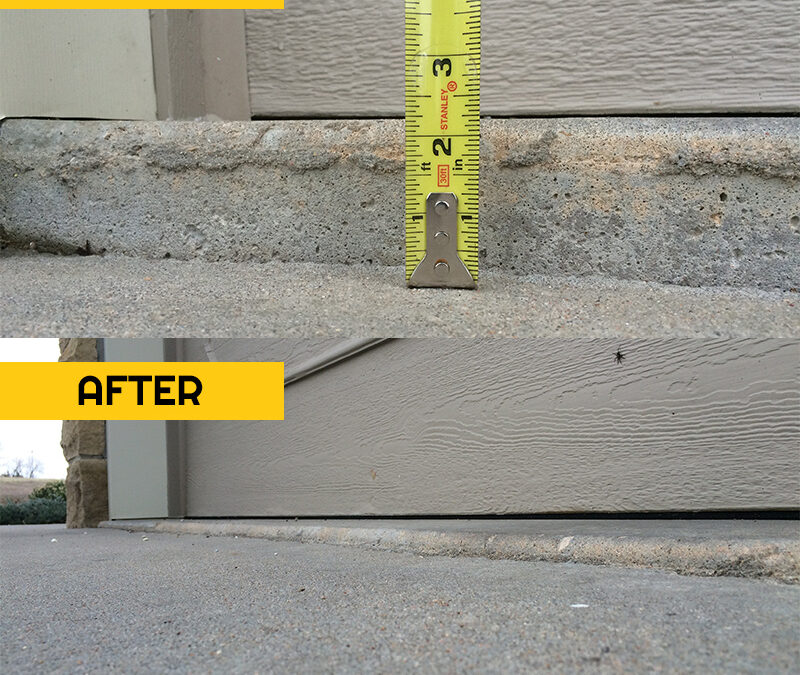
Uneven concrete is something many Champaign homeowners run into over time. Whether it’s a driveway that’s no longer level or a sidewalk that’s become a tripping hazard, these issues don’t happen overnight—and they’re usually a sign of what’s going on beneath the surface.
Understanding the underlying causes can help you take the right steps to correct the problem and prevent it from getting worse.
What Causes Concrete to Settle in Champaign?
Concrete doesn’t generally fail on its own—the issue almost always starts with the ground underneath. In Central Illinois, several factors contribute to this:
Unstable or Loosely Packed Soil
If the ground beneath your concrete wasn’t compacted properly during installation, it can slowly compress over time. As the soil shifts and settles, empty pockets can form, leaving the slab without proper support.
Changes in Soil Moisture
The soil in the Champaign area is sensitive to moisture fluctuations. When the ground becomes overly saturated, it can soften and lose its ability to hold weight. On the flip side, dry conditions can cause soil to contract, creating gaps beneath the surface.
Runoff and Water Movement
Water flowing across or beneath your property can carry away supporting soil. This is especially common near downspouts, walkways, and driveways where water tends to collect or drain improperly.
Natural Ground Movement Over Time
Even in well-built areas, the ground is constantly adjusting. Seasonal changes and long-term settling can gradually impact the stability of concrete surfaces.
How to Tell If Your Concrete Is Settling
Some signs are easy to spot, while others form gradually. Keep an eye out for:
- Sections of concrete that appear lower than others
- Cracks that continue to widen over time
- Water collecting in certain areas after rain
- Separation between slabs or nearby structures
- Uneven surfaces that feel off when walking or driving
These are early indicators that the support beneath your concrete may be compromised.
The Most Effective Way to Fix It
In many cases, removing and replacing concrete isn’t required. A more efficient option is to restore the support underneath the slab.
Concrete Lifting (Slabjacking)
This process includes placing material beneath the concrete to fill empty spaces and raise it back to a level position. It targets the root of the issue—the lack of support below the surface.
Why It’s a Smart Choice for Champaign Homeowners
- Less invasive than full replacement
- Completed quickly with minimal downtime
- More affordable than pouring new concrete
- Helps prevent further movement when properly addressed
Steps to Reduce Future Problems
While you can’t stop the ground from shifting entirely, you can take steps to limit the impact:
- Make sure water is directed away from your home and concrete surfaces
- Keep drainage systems functioning properly
- Address pooling water as soon as you notice it
- Monitor small changes before they turn into larger issues
Take Care of the Problem Early
Concrete that continues to settle can lead to bigger concerns, including safety hazards and structural damage. Taking action early gives you more options and helps avoid more extensive repairs later on.
At Sealtite Insulation & Slabjacking, we help Champaign homeowners correct uneven concrete by restoring the support beneath it. Our process is designed to be efficient, cost-effective, and long-lasting.
👉 Call Sealtite Insulation & Slabjacking today to get a free estimate and take care of your concrete before the problem spreads.