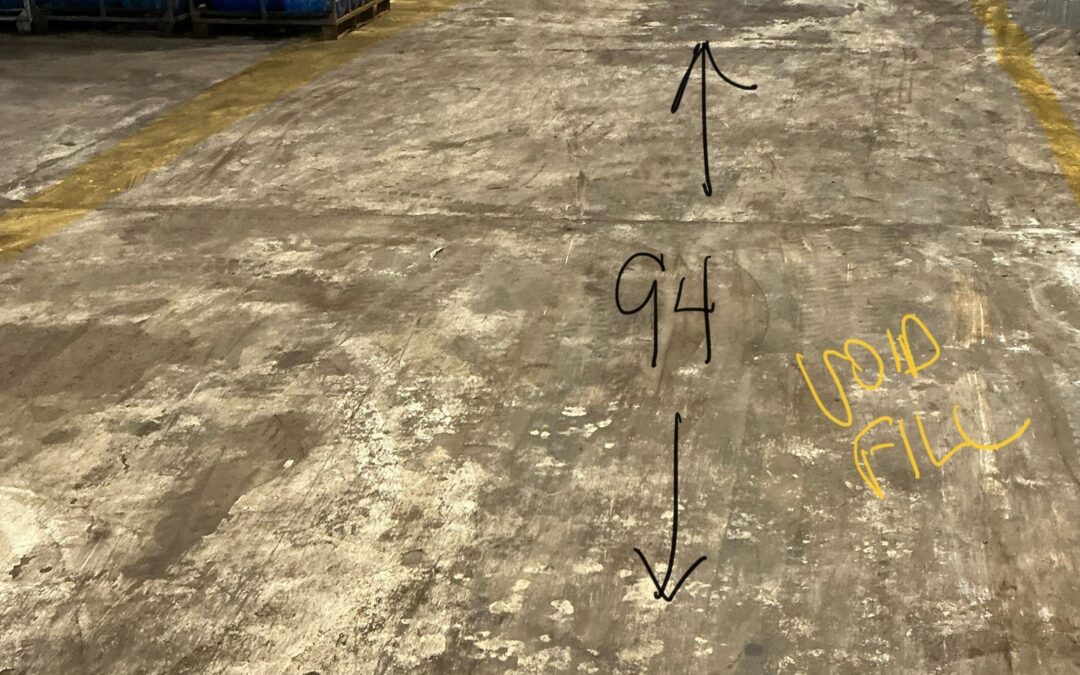
An uneven concrete floor can interrupt more than the appearance of a facility. In a factory or warehouse, settled slabs can create trip hazards, rough transitions for equipment, and problems along busy travel routes. Sealtite Insulation and Slabjacking offers free estimates to help facility owners and managers determine whether polyurethane foam jacking is the right solution for their concrete. For suitable slabs, this process can restore support and improve floor elevations without the extensive removal involved in replacement.
When the Floor Starts Affecting Daily Operations
Industrial concrete needs dependable support beneath it. When the underlying soil settles or washes away, empty spaces can develop under the slab. The concrete may sink, become uneven at joints, or move when traffic passes over it.
Inside a working facility, these problems may show up as uneven transitions between floor sections, rocking slabs, or areas where carts and equipment no longer travel smoothly. Addressing the condition starts with understanding what is happening beneath the floor—not simply looking at the surface.
Restore Support Beneath the Existing Concrete
Foam jacking works by placing expanding polyurethane beneath a slab to fill voids and lift settled sections.
Sealtite’s installers drill small injection holes through the concrete, which can be as small as 3/8 of an inch. Polyurethane is then injected through those openings as a liquid. As it expands, it fills accessible spaces beneath the slab and creates the pressure needed to raise the concrete.
The goal is to improve the slab’s elevation while restoring support underneath it. After the lifting process, the injection holes are patched, and joint sealing may be recommended to help limit water entry.
For a factory or warehouse, the repair plan must account for the condition of the concrete, the extent of settlement, and how the area is used. A professional evaluation helps determine whether lifting is appropriate or whether damaged sections require another approach.
Small Openings. Lightweight Material. Strong Support.
Several characteristics make polyurethane a practical option for industrial concrete repair.
Smaller injection holes
Traditional mudjacking commonly requires holes approximately 1 to 1½ inches in diameter. Polyurethane can be installed through much smaller openings, leaving less noticeable patches and requiring less drilling through the existing slab.
Less added weight beneath the floor
Polyurethane is lightweight compared with traditional mudjacking material. That matters when the soil beneath the concrete has already settled: restoring support with a lighter material limits the additional weight placed on that base.
Material selected for the project
Sealtite uses strong polyurethane materials and can consider higher-density foam when a project calls for it. Industrial facilities have different loading requirements, so the foam selection and repair approach should be evaluated for the specific area and its use.
Water-resistant support
Polyurethane is water resistant and can help limit washout where it fills spaces beneath the concrete. Protecting the repair also requires addressing the paths that allow water underneath the slab, including open joints, drainage issues, and exposed edges.
Plan the Repair Around Your Facility
Removing and replacing concrete can involve demolition, debris removal, new concrete placement, and curing time. Where the existing slab is suitable for lifting, foam jacking offers a way to repair it with less disruption.
The polyurethane can support weight immediately after lifting. However, concrete patches and joint sealants typically need 24 hours to cure.
Planning access and traffic routes ahead of time helps the repair fit into the facility’s daily operations.
Protect the Repair for the Long Term
A lasting repair depends on both the material beneath the slab and the conditions around it. Sealtite may recommend sealing joints, correcting drainage, directing downspouts away from concrete, or maintaining proper backfill along slab edges to help prevent future erosion.
Most Sealtite projects qualify for a lifetime warranty, subject to the project’s eligibility and maintenance requirements. For qualifying repairs that meet those conditions, if the concrete settles again, Sealtite returns to lift it at no charge. Your representative can explain the coverage and requirements for your industrial project.
Put Your Concrete Repair Plan in Motion
Uneven or rocking concrete deserves attention before it creates greater disruption in your facility. A professional evaluation can help identify the cause, assess the existing slab, and establish the right repair approach.
Contact Sealtite Insulation and Slabjacking today to schedule your free estimate for factory or warehouse concrete repair. Our team can evaluate your problem areas and determine whether polyurethane foam jacking can help restore a more level, properly supported surface.