
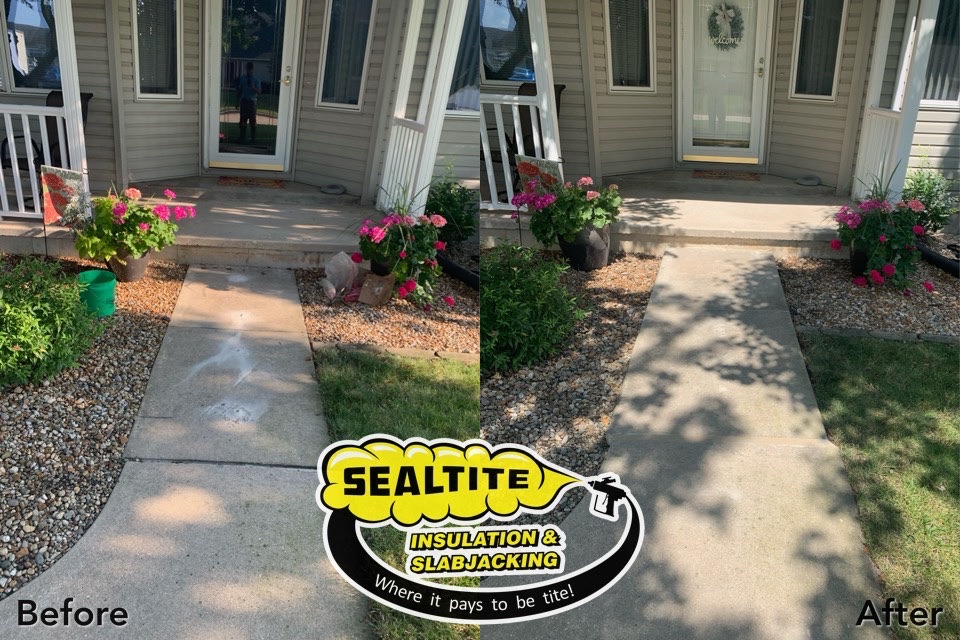
A concrete slab should remain solid and stable when you walk or drive across it. If part of your driveway, sidewalk, patio, or garage floor rocks or moves, it is usually a sign that the soil underneath is no longer providing adequate support. Contact Sealtite Insulation & Slabjacking today to schedule a free estimate and have the area professionally evaluated before the damage gets worse.
What Does It Mean When a Concrete Slab Rocks?
A rocking slab often means there is an empty space or unstable soil beneath the concrete. When part of the supporting soil is washed away or becomes soft, the slab may begin to move up and down like a teeter-totter when weight is placed on it.
Although the movement may seem minor at first, concrete is not designed to bend repeatedly. Without proper support underneath, the slab will likely continue to settle, shift, crack, or break.
What Causes Concrete to Become Unstable?
Several conditions can create movement beneath an Illinois concrete slab:
Poor Soil Compaction
Before concrete is poured, the soil underneath must be properly compacted. If the ground was not adequately prepared, it may settle over time and leave unsupported areas beneath the slab.
Improper Backfill
Loose or poorly compacted backfill around a home, driveway, or other structure can gradually shift. As the soil settles, the concrete above it may lose support and begin rocking.
Water Erosion
Water is one of the most common causes of soil loss beneath concrete. Drainage problems, leaking downspouts, heavy rain, and water entering through cracks can soften or wash away the supporting soil.
Illinois weather can place additional stress on these vulnerable areas. Moisture that reaches the ground beneath the slab may freeze and expand during colder weather. As temperatures change, repeated freezing and thawing can contribute to further soil movement and concrete settlement.
What Can Happen If You Ignore a Rocking Slab?
A moving slab will not usually correct itself. As the soil underneath continues to shift or wash away, homeowners may begin to notice several problems.
The Concrete May Continue to Settle
Without stable support, the slab can sink farther and become increasingly uneven.
Cracks Can Form or Grow
Repeated movement places stress on the concrete. Eventually, the slab may crack or break apart, making it more difficult to lift successfully.
Trip Hazards Can Develop
Uneven sidewalks, driveways, patios, and garage approaches can create dangerous height differences between concrete sections. These areas may become tripping hazards for family members, visitors, customers, or employees.
Water May Flow in the Wrong Direction
A settling slab can change the direction in which water drains. Instead of flowing away from a home or building, water may begin collecting near the foundation. Over time, poor drainage may contribute to additional soil erosion or moisture-related foundation concerns.
How Can Sealtite Stabilize a Rocking Concrete Slab?
When the concrete is still in suitable condition, polyurethane foam may be used to fill empty spaces and stabilize the slab. Our installers drill small holes into the concrete and inject a two-part polyurethane material underneath it.
The material enters as a liquid and then expands into a strong foam. As it expands, it fills voids beneath the slab, helps stabilize the area, and can gently lift settled concrete when needed. Once the work is complete, the injection ports are removed and the small holes are patched.
Every situation is different, which is why a professional evaluation is important. A Sealtite representative will inspect the concrete, assess its condition, take measurements, and determine whether polyurethane slabjacking is the appropriate solution.
Address the Movement Before the Concrete Breaks
Rocking concrete is an early warning sign that the slab is losing support. Addressing the problem before the concrete becomes severely cracked or broken may help preserve the existing slab and reduce the need for replacement.
If you have a rocking driveway, sidewalk, patio, garage floor, or another unstable concrete surface in Illinois, contact Sealtite Insulation & Slabjacking today. We offer free estimates and stand behind our slabjacking work with a lifetime warranty.