
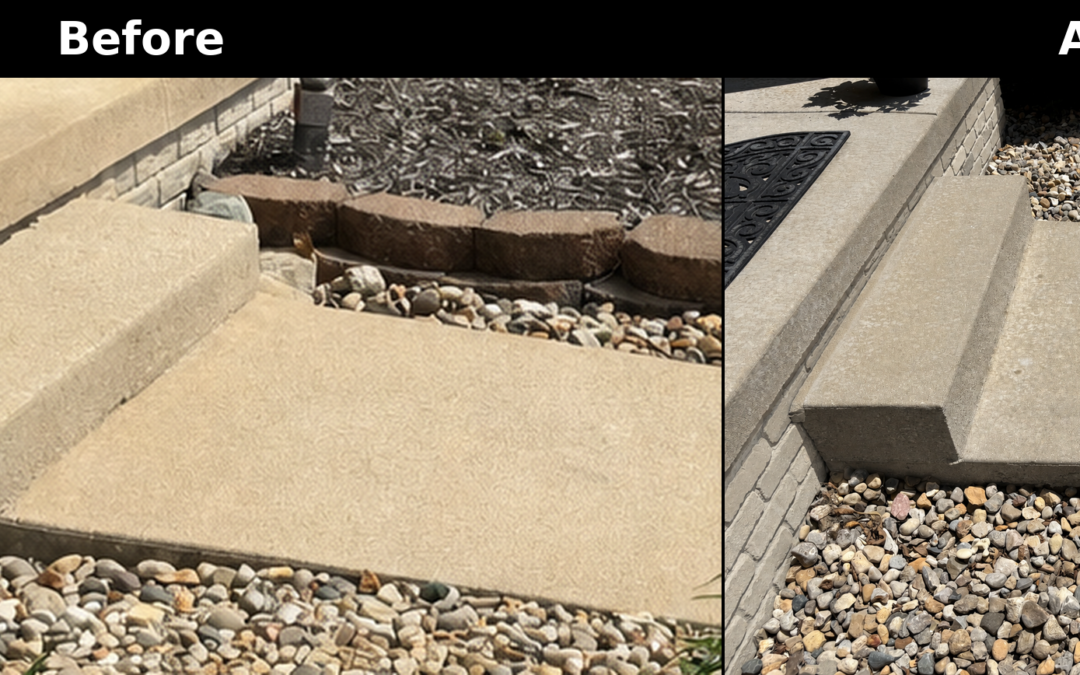
Sunken front steps are more than an appearance problem. They can create uneven walking surfaces, noticeable gaps and annoying trip hazards near one of the most frequently used entrances to your home. Illinois weather and changing soil conditions can make these problems worse over time—but complete concrete replacement may not be necessary.
If your front steps, porch or entryway concrete has settled, call Sealtite Insulation & Slabjacking for a free estimate. Our team can evaluate the problem and determine whether slabjacking can safely lift the concrete back into place. Qualifying slabjacking work is also protected by our lifetime warranty, giving Illinois homeowners added confidence in their repair.
Start With What You See
The location and type of movement can help determine whether your concrete may be a good candidate for slabjacking.
The steps have pulled away from the porch
A visible gap between your steps and porch often means the ground beneath the steps has settled. Slabjacking may be able to lift the steps and reduce the separation without removing the existing concrete.
One side of the walkway is lower
Uneven sidewalk sections near the front entrance can collect water and create a tripping hazard. Lifting the lower section can help create a smoother transition between slabs.
Water flows toward the foundation
Settled concrete can direct rainwater toward your home instead of away from it. Correcting the concrete’s position may improve drainage and reduce water accumulation near the foundation.
The concrete is sinking but still in good condition
Concrete that is settled but remains structurally sound is often a better candidate for lifting than concrete that is severely cracked, crumbling or deteriorated.
Why Front Steps Sink in Illinois
Concrete is only as stable as the ground supporting it. Several conditions commonly found throughout Illinois can cause the soil beneath front steps and walkways to shift.
- Freeze-thaw cycles: Moisture in the soil freezes, expands and thaws repeatedly during an Illinois winter.
- Soil washout: Heavy rain or poor drainage can carry away soil beneath the concrete and leave unsupported spaces.
- Improperly compacted fill: Soil placed during construction may gradually settle if it was not compacted correctly.
- Dry conditions: Extended periods without rain can cause certain soils to shrink and create voids beneath the slab.
- Downspout or gutter problems: Water repeatedly draining near the steps can weaken or wash away the supporting soil.
These conditions are common in communities throughout Central Illinois, including Bloomington-Normal, Peoria, Champaign and surrounding areas.
How Sealtite Lifts Sunken Concrete
Slabjacking allows our team to work with the concrete you already have. The process is straightforward:
- We inspect the settled area and determine whether the concrete can be lifted.
- Small holes are drilled into the concrete.
- Specialized polyurethane material is injected beneath the slab.
- The material fills underlying voids and carefully lifts the concrete.
- The holes are sealed once the desired position is reached.
Because the existing concrete remains in place, slabjacking generally involves less disruption than tearing out and replacing the entire area.
Lift or Replace? Use This Quick Comparison
Slabjacking may be appropriate when:
- The concrete is settled or uneven.
- Gaps have formed between steps or adjoining slabs.
- The surface is mostly intact.
- Voids beneath the concrete are contributing to movement.
- You want to avoid unnecessary demolition.
Replacement may be more practical when:
- The concrete is severely cracked throughout.
- Large sections are crumbling or deteriorating.
- Reinforcement or structural damage prevents a safe lift.
- The original concrete was installed incorrectly and cannot be corrected through lifting.
Every project is different, which is why an on-site evaluation is the best way to determine the appropriate repair.
Don’t Wait for a Small Gap to Become a Larger Problem
Concrete settlement does not improve on its own. As the slab continues moving, gaps can become wider, water can reach the underlying soil more easily and uneven surfaces may become more noticeable.
Addressing sunken front steps early may help preserve the existing concrete while the slabs are still in suitable condition for lifting.
Frequently Asked Questions
Can slabjacking lift an entire set of concrete steps?
In many cases, yes. The answer depends on the condition, construction and weight of the steps, along with the amount of settlement. An inspection is necessary to confirm whether lifting is appropriate.
Will the repair damage my landscaping?
Slabjacking is performed through small injection holes and usually requires less disturbance than concrete removal and replacement.
How much does front-step slabjacking cost in Illinois?
Pricing depends on the size of the area, the amount of lifting required, accessibility and the conditions beneath the concrete. Sealtite provides free, project-specific estimates so homeowners receive pricing based on their actual repair needs.
Is the work covered by a warranty?
Sealtite offers a lifetime warranty on qualifying slabjacking work. Our team can explain the warranty details during the estimate process.
Schedule Your Free Illinois Slabjacking Estimate
If your front steps, porch or walkway has started to sink, Sealtite Insulation & Slabjacking can help you explore your repair options. We serve homeowners throughout Central Illinois with professional concrete lifting solutions designed to restore uneven surfaces and fill underlying voids.